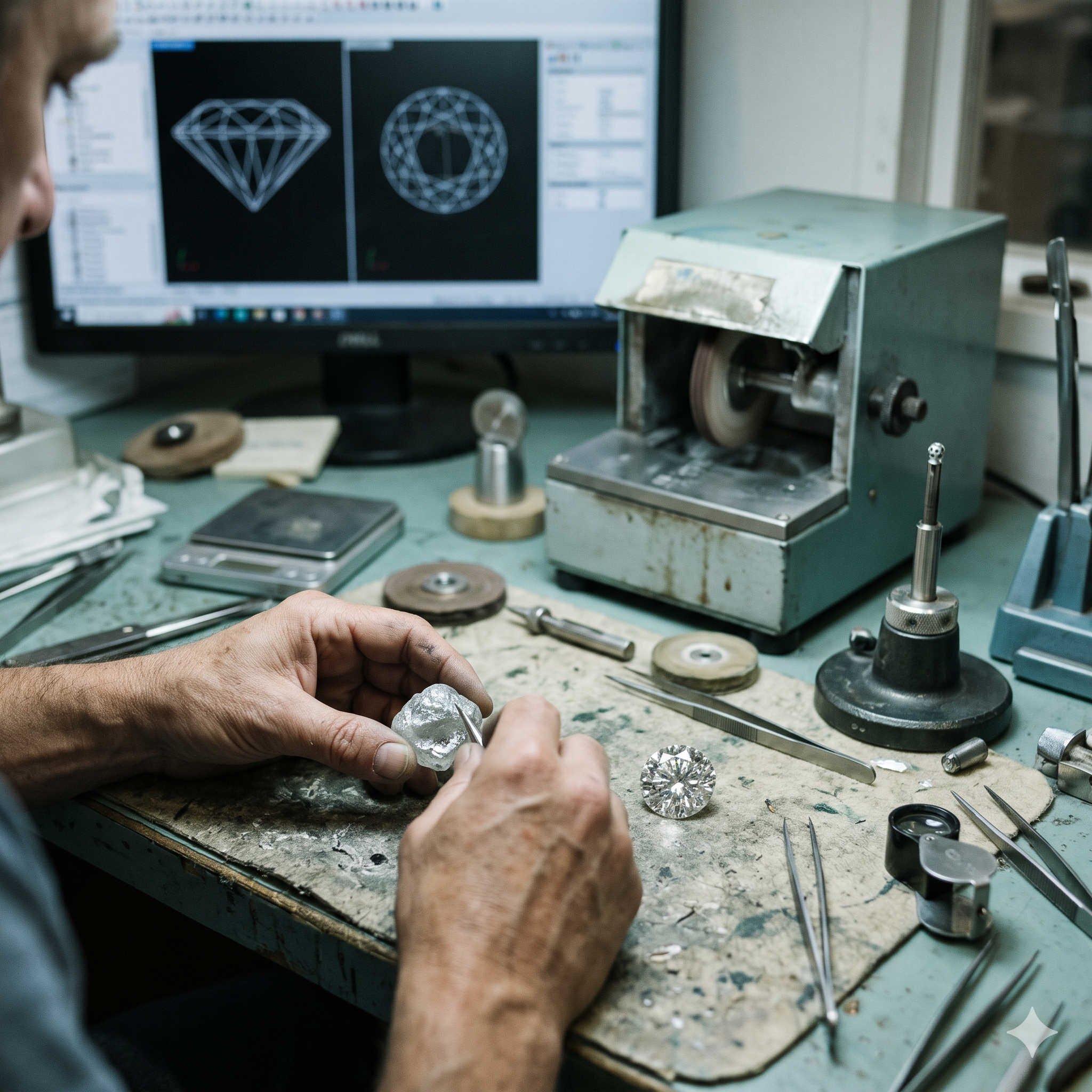
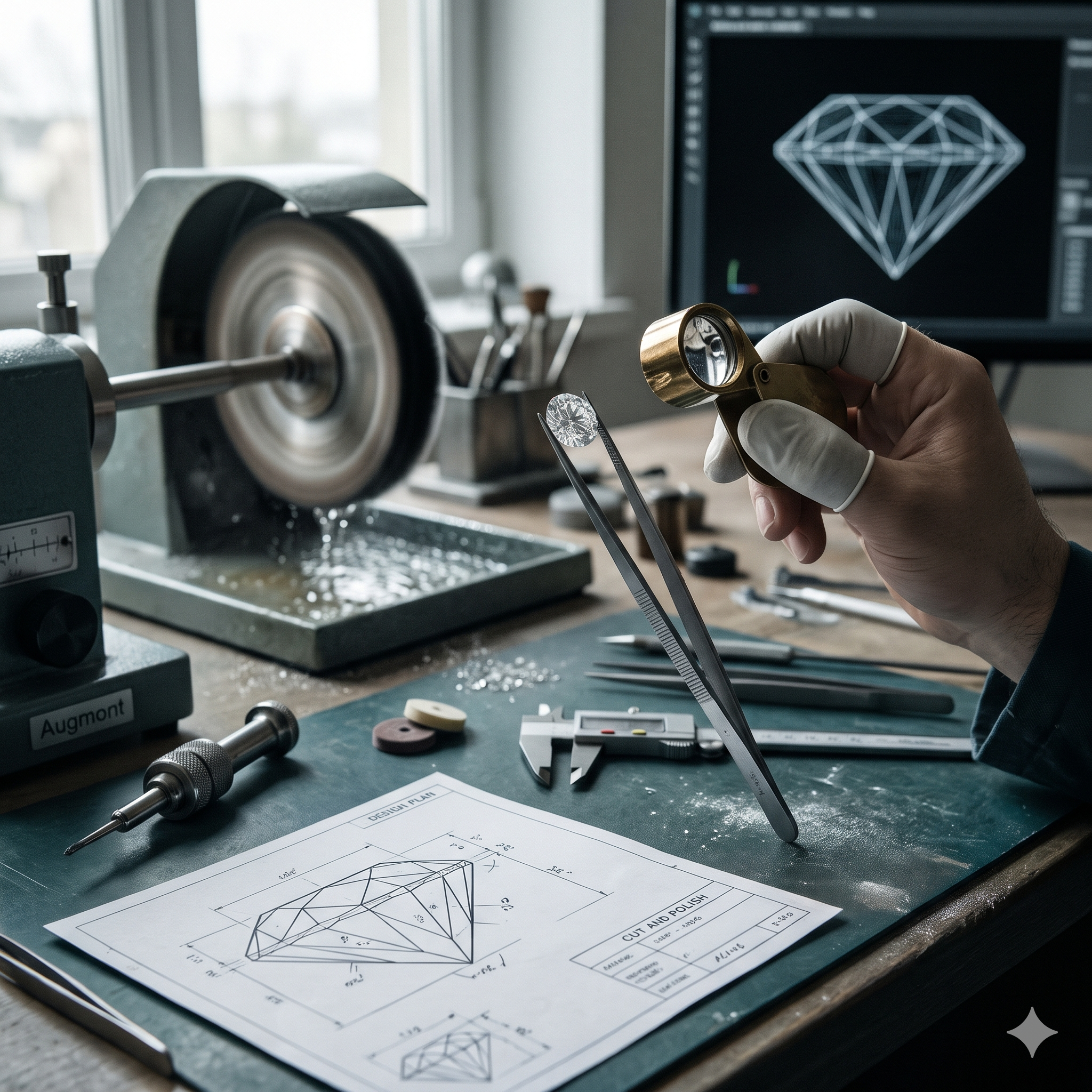
India has long been recognized for its diamond cutting and polishing expertise. However, the growth of lab-grown diamonds is creating new opportunities in the country’s diamond manufacturing industry. Technological advancements are transforming how diamonds are grown, processed, and evaluated. From advanced growth chambers to automated cutting equipment, manufacturers are adopting modern technologies to improve production precision, maintain quality, and manage operational costs.
This blog explores how technological advancements are changing lab-grown diamond manufacturing in India, particularly in diamond growth, processing, quality control, and production efficiency.
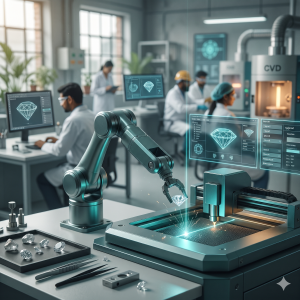
- Advanced Technologies Are Improving Diamond Growth: Lab-grown diamonds are primarily manufactured using two methods: Chemical Vapor Deposition (CVD) and High Pressure High Temperature (HPHT). CVD involves introducing carbon-containing gases into a controlled chamber, where carbon atoms gradually deposit onto a diamond seed to form a crystal. HPHT uses high pressure and high temperature to replicate the conditions required for natural diamond formation.
Modern manufacturing systems allow better control over temperature, pressure, gas composition, and other growth conditions. Improved monitoring systems help manufacturers maintain consistent production parameters and identify process variations. These developments can support better crystal quality and reduce production inefficiencies.
For Indian manufacturers, improving growth technology is particularly important for managing production costs while meeting the quality expectations of domestic and international markets.
- Automation Is Transforming Diamond Processing: Diamond processing requires precision, particularly during planning, cutting, and polishing. Traditional methods rely heavily on skilled craftsmanship, but automated equipment is increasingly supporting these activities.
Computer-aided design and advanced imaging technologies help manufacturers examine rough diamond crystals and determine suitable cutting patterns. Automated laser cutting systems can execute these patterns with greater precision, while modern polishing equipment supports consistency across production batches.
Artificial intelligence is also finding applications in diamond manufacturing. Image recognition and data analysis tools can assist in identifying inclusions, evaluating crystal characteristics, and optimizing cutting decisions.
These technologies complement human expertise, allowing skilled professionals to focus on complex decisions while automated systems handle repetitive and precision-based operations.
- Digital Quality Control and Production Efficiency: Quality control is another area where technology is making a difference. Advanced imaging systems, spectroscopy, and automated inspection equipment help manufacturers examine diamond characteristics more accurately.
Digital monitoring systems can also track production parameters, equipment performance, and manufacturing timelines. This allows businesses to identify inefficiencies, reduce material wastage, and improve resource utilization.
As competition increases in the global lab-grown diamond market, manufacturers need reliable quality assessment processes and consistent production standards to meet buyer expectations.
Final Thoughts
Technology is reshaping lab-grown diamond manufacturing in India by improving diamond growth processes, introducing automation, and strengthening quality control. These developments are helping manufacturers move towards more precise, efficient, and scalable production systems.
Going forward, investment in advanced machinery, digital technologies, and skilled professionals will play an important role in strengthening India’s position in the global lab-grown diamond industry.